
Call us now :07971405338
 Send Inquiry
 Send Inquiry
pressure guage
Price 600 INR/ Piece
MOQ : 10 Pieces
pressure guage Specification
- Thread
- 1/4 inch BSP
- Outer Size
- Standard diameter 2.5 inches
- Case
- Steel with red powder coating
- Glass Size
- Clear glass standard size
- Measuring Range
- 0 to 10 kg/cm²
- Bourdon Tube
- Phosphor bronze
- Display
- Analog dial
- Sensor Type
- Bourdon tube mechanism
- Material
- Steel brass and phosphor bronze
- Working Presssure
- Up to full scale range (10 kg/cm²)
- Seal Material
- Rubber gasket
- Grade
- Industrial grade
- Application
- General pressure measurement
- Accuracy
- ±2.5%
About pressure guage
A pressure gauge is a tool used to measure the pressure of a gas or liquid in a pipe, system, or container. A pointer that shows the pressure on a scale is often seen on a round dial. A pressure sensor, a spring, and a mechanism to transfer the pressure from the sensor to the dial are further possible components of the gauge. Many different applications, including industrial operations, hydraulic and pneumatic systems, heating and cooling systems, and medical equipment, use pressure gauge. It comes in a variety of forms, such as digital gauges, diaphragm gauges, and Bourdon tube gauges.
Reliable Pressure Measurement for Industrial Applications
This pressure gauge is engineered to meet the demands of industrial environments, delivering dependable performance in monitoring systems where accurate pressure readings are essential. Its phosphor bronze Bourdon tube and robust steel housing ensure longevity and resistance to harsh conditions. The analog dial display allows for straightforward, at-a-glance readings, making it a versatile choice for various industries.
Effortless Installation and Maintenance
The gauge features a standard 1/4 inch BSP threaded connection, simplifying the installation process across a wide range of equipment. The use of a rubber gasket seal minimizes leaks and maintenance concerns. The clear glass dial and standard size components ensure quick inspections and hassle-free replacements, supporting seamless operation for distributors and end-users alike.
FAQs of pressure guage:
Q: How is this pressure gauge installed in industrial equipment?
A: The pressure gauge is designed with a standard 1/4 inch BSP threaded connection, allowing for easy installation into compatible ports on industrial machinery, pipelines, or system manifolds.Q: What are the primary benefits of using an analog dial pressure gauge with a Bourdon tube mechanism?
A: Analog dial gauges with Bourdon tube mechanisms, like this model, offer reliable mechanical readings, durability, and resilience against vibration and pulsations commonly present in industrial settings.Q: When should the pressure gauge be calibrated or checked for accuracy?
A: For optimal performance, periodic calibration is recommended, typically every six to twelve months, or as per your facilitys maintenance protocol. This ensures the 2.5% accuracy rating is maintained throughout its service life.Q: Where can this industrial grade pressure gauge be applied?
A: It is suitable for a broad range of applications such as chemical plants, water treatment facilities, manufacturing units, and other general pressure measurement requirements within India.Q: What is the process of measuring pressure with this gauge?
A: When installed, the phosphor bronze Bourdon tube inside the gauge flexes in response to system pressure. This movement is mechanically transferred to the analog dial, displaying the current pressure reading in kg/cm.Q: How does the rubber gasket seal enhance the gauges reliability?
A: The rubber gasket serves as a seal between the gauge components, preventing leaks and ingress of contaminants, thereby enhancing overall operational reliability and longevity of the device.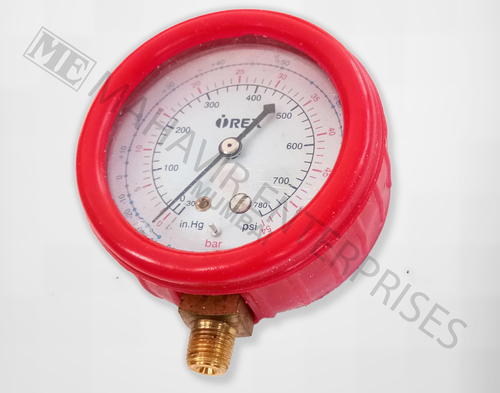
Tell us about your requirement

Price:
Quantity
Select Unit
- 50
- 100
- 200
- 250
- 500
- 1000+
Additional detail
Mobile number
Email

More Products in Refrigeration Gauges Category

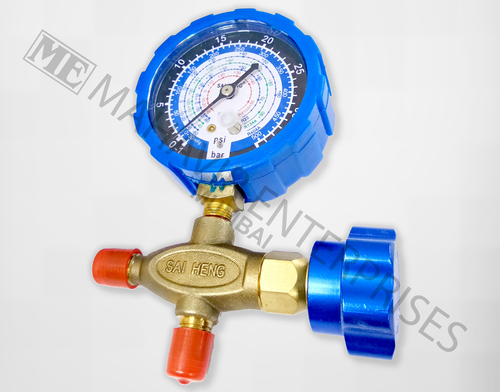
Refrigeration Pressure Gauges
Price 800 INR / Piece
Minimum Order Quantity : 10 Pieces
Material : Brass / Stainless Steel / Zinc Alloy
Application : Other, Refrigeration, HVAC, Industrial Chillers
Grade : Industrial
Display : Analog
Single Gauge Manifold
Price 750 INR / Piece
Minimum Order Quantity : 5 Pieces
Material : MS
Display : Nil
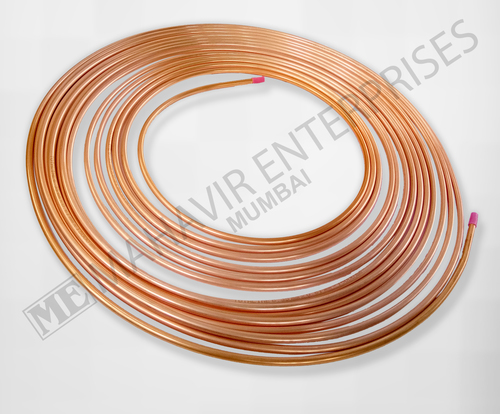
Copper Pipe For Refrigeration
Price 620 INR
Minimum Order Quantity : 10
Material : Copper
Application : Other, Refrigeration systems
Grade : Highquality copper


 Send Inquiry
Our Products
- Refrigerator Spares
- Core Board
- Carrier Remotes
- Indoor And Outdoors Airconditioner Stands
- Brazing Rods
- Capacitors
- Indoor A C Fan Motors
- Outdoor A C Fan Motors
- Wires
- 4 KVA And 5 KVA Stabilizer
- Capillary Tube
- Copper Strainers
- Refrigerator Legs
- AC Insulation Tubes
- Airconditioners And Refrigerators Electrical Parts
- Valves
- AC Drain Pipe
- Copper Pipes
- Floor AC Stand
- Air Conditioner Indoor Unit
- Air Conditioner Outdoor Unit
- AC Cooling Coils
- Refrigerant Gases
- AC Plastic Grill
- AC Fan Blade
- AC Swing Motors
- AC Contactors
- PTC Relay
- Refrigerator UI Board
- Copper And Brass Fittings
- Cleaning Chemicals
- Refrigerator and Air Conditioner Compressors
- Valve and Manifolds
- Refrigeration Gauges
- Air Conditioner Stands for Indoor and Outdoors
- Indoor Units For Split Ac
- Refrigeration & Equipment
- Refrigeration Gas

Plot No. 3, Ushakal, Near Indian Overseas Bank, Hindu Friends Society Road, Jogeshwari East, Mumbai - 400060, Maharashtra, India

Mr. Tushar Vadalia
(Proprietor)
Mobile :07971405338
 Send Inquiry
 Send SMS
Developed and Managed by Infocom Network Private Limited.
